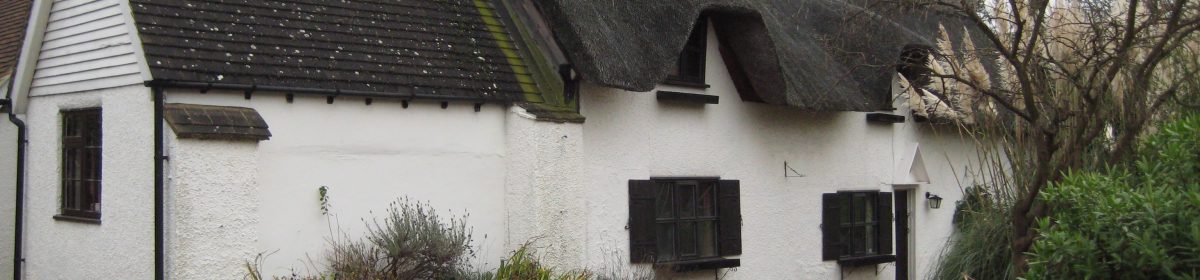
Now we’re finally ready to start restoring the cottage, how did we get here? The story begins in 2007 when we bought The Old Smithy. It was a completely emotional purchase as we had no plans to buy a listed property, we just fell in love with it. We knew it would not be an easy place to live with and maintain but that certainly didn’t put us off.

Initially we focused on the outside – getting rid of the car park in front and turning it into a cottage garden and removing 22 over grown leylandii along the boundary with next door at the back. We also felt it was important to live with the space and let our ideas evolve as to how we wanted to develop and renovate our home. We have not given ourselves any deadlines which reduces the pressure.
We joined the Listed Property Owners Club, they have an informative bi-monthly magazine, an annual exhibition which is great for sourcing suppliers and talking to people about managing an old property and a very useful help line. Another source of good advice is the Society for the Protection of Ancient Buildings, they publish a number of useful books and technical advice notes, run courses and also have a very good advice line. We attended one of their excellent one day courses earlier this year on ‘Understanding Your Old House’. I wish we’d done it much earlier!
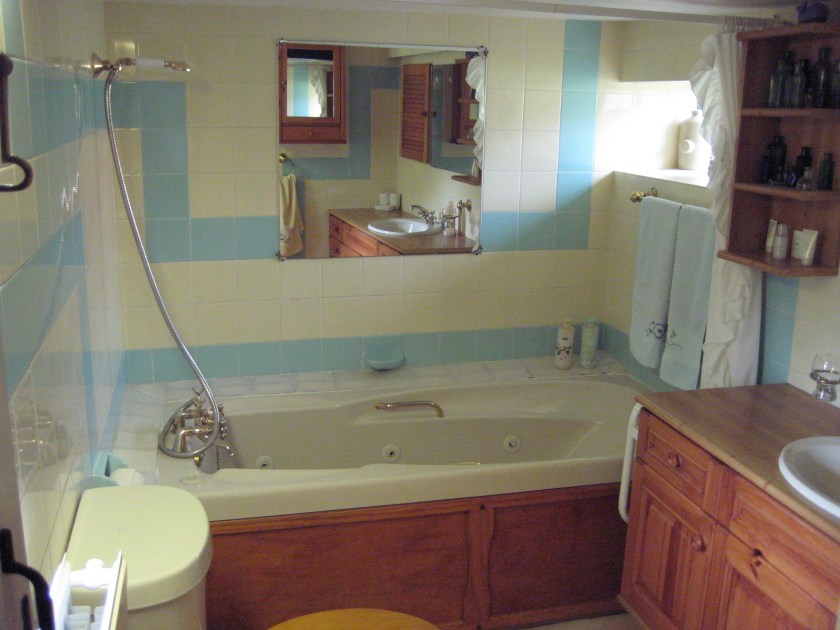
One thing we did do early on was to get our local authority conservation officer round to advise us on how to approach our project. Each local authority works slightly differently and it’s good to know how yours wants you to approach things before you start. This was helpful as he suggested we put in an application for everything, the new developments alongside the renovations, as they would look more favourably on the extension if they knew it was part of restoring the old house. He also said replacing like for like would not need permission enabling us to get on and update the bathroom, an urgent need as the ceiling was so low M had to kneel in the bath to have a shower!
We sourced an architect in 2014 and took more than a year to develop the plans before submitting them for full planning permission and listed building consent in 2016. We did not have a happy experience with our architect and realise now that we should have done more research and spoken to previous clients to be sure they would be right for us.
Once we had permission to go ahead we still needed to draw up detailed plans to meet building regulations and satisfy a number of conditions. This all takes time so we weren’t ready to start the main build until July 2018.
The modern extension came first so we could move the kitchen out of the old house before the renovations began. That done by August our specialist restoration builders have been able to move in.
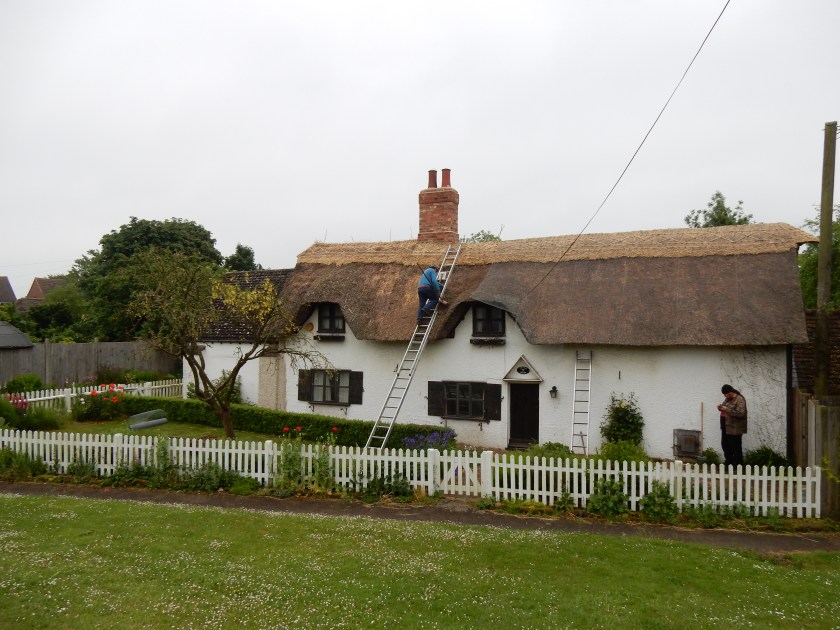
We have always seen ourselves as guardians of this old building and want to retain as much of the original fabric as possible and only restore and replace where absolutely necessary. Our surveyor dated the property as mid 17th century, we believe it is much older. There is reference to it in the 1505 will of Hugh Russell as ‘a cottage situated by the common way with the forge’ which was left to his son Thomas. Although it’s unlikely to be exactly the same cottage as ours it shows it was a working smithy from at least the 1400s and some of the materials used in our house may well date from then as they would rebuild and recycle on site.
In the late 1800s, alongside being the village smithy, it operated as a beer house, the Plough and Harrow, only closing in 1912. We believe it continued as a blacksmiths for a little while longer before closing for good and becoming a domestic dwelling. It was certainly that by 1927 when it was assessed for its rateable value as a former public house and smithy at £5 and 10 shillings a year. It’s a lot more than that now!
The tiled roof extension to the left of the cottage was the smithy and, once the blacksmith moved out, it was used as a general out building and garage. In the 1960s the end wall of the cottage was taken out at ground floor level to extend the sitting room into the former smithy making it an integral part of the cottage.

We have decided to renovate the old house in stages partly because of cost and also because of the disruption to us and the building. The focus is on joining our new extension, now including the kitchen, to the dining room (in the 2004 extension built by the previous owners) and renovating the sitting room.

For some reason we and the builders can’t fathom when they extended the living space into the smithy they laid the floor at its existing level, 50cm higher than the cottage floor. With two steps immediately beneath a supporting beam for the wall above to link the two spaces it has been a regular spot for banging our heads. It was one of our early decisions that we needed to lower the floor so that we had one level in that room.

Earlier this year we booked the restoration builders to start on the old house in mid-July as the external work really needs to be done before the hard frosts set in. We had expected the extension to be long finished by then but delays to the roof, floor and kitchen meant the two phases were going to overlap for a few weeks, an interesting challenge juggling a variety of trades on site.
So in the second week of July (yes, I am a bit behind on my blog updates), while managing the completion of our kitchen and the installation of the decking, we also cleared the sitting and dining rooms which we had been using as swing space for the previous year. With no where else to put things the only solution was a storage unit. Getting rid of stuff comes later when we have the space to sort out what we want to keep and use in our newly restored home.
With the restoration builders due to start on the Monday one curve ball was a request late on the preceding Friday that they come and set up on the Saturday morning. It turned out the owner and hands on manager was going on holiday the next week and wanted to agree with his team what needed to be done while he was away. So with the site set up and us facing a party weekend with M’s family there was still some last minute clearing we had to do on the Sunday evening to be ready for the Monday morning start. We faced a late night to get everything done in time!
 From life at the desk to living the dream
Perhaps you could re-open it as the Plough & Harrow to restore it’s former position in village life 😉
LikeLike
The risk is we might end up drinking the profits!
LikeLike