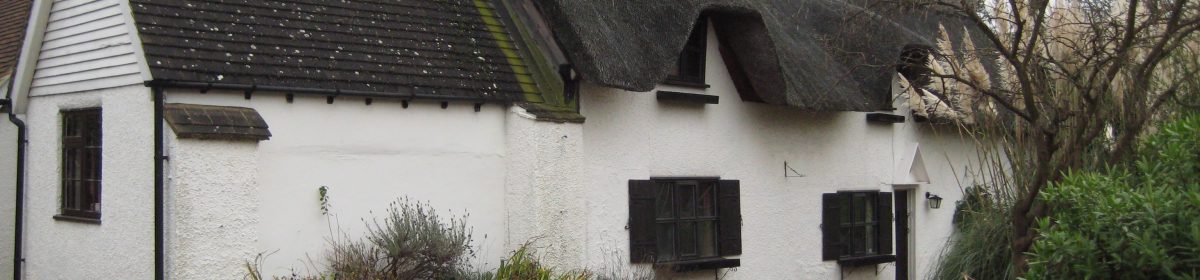
Our initial plan had been to leave everything to do with the old house until after the extension was finished. However, last year it became clear our chimney was in a precarious position with growing foliage and crumbling bricks.
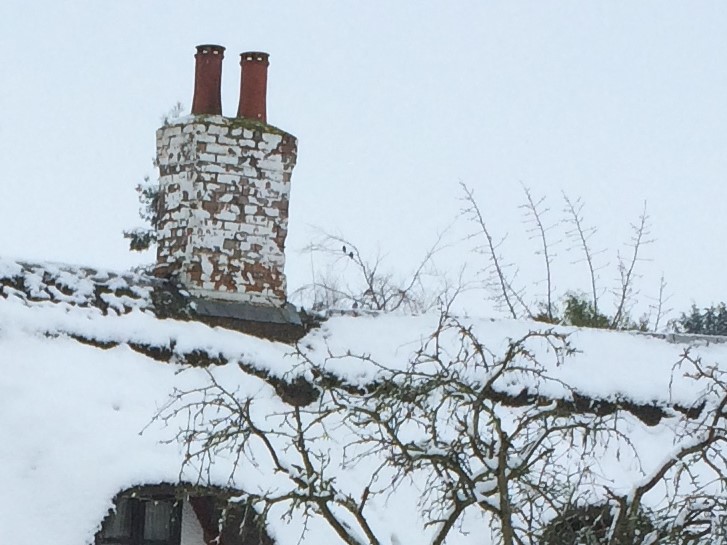
We needed a new ridge on our thatched roof so it made sense to get both done at the same time. Thatchers are in short supply and book up to a year or more in advance. We had ours arranged for March which meant the builders needed to fix the chimney by February. I spent a nervous winter expecting after every high wind to find our chimney in the garden!
February came with the chimney still attached to the roof. The bricks were so rotten the builder had to rebuild the stack from about half a metre below the ridge height. Unfortunately for him he was working on it when the ‘beast from the east’ bad weather was at it’s height. All credit to him he only missed one day because of it.

It’s often the case with old houses that you start with one thing that needs doing, in our case the ridge, and quickly find it expands to include other work that has to be done. As we were getting the chimney done we decided we should get it lined for a real wood fire at the same time. Essential to prevent the thatch catching light and for the insurance.
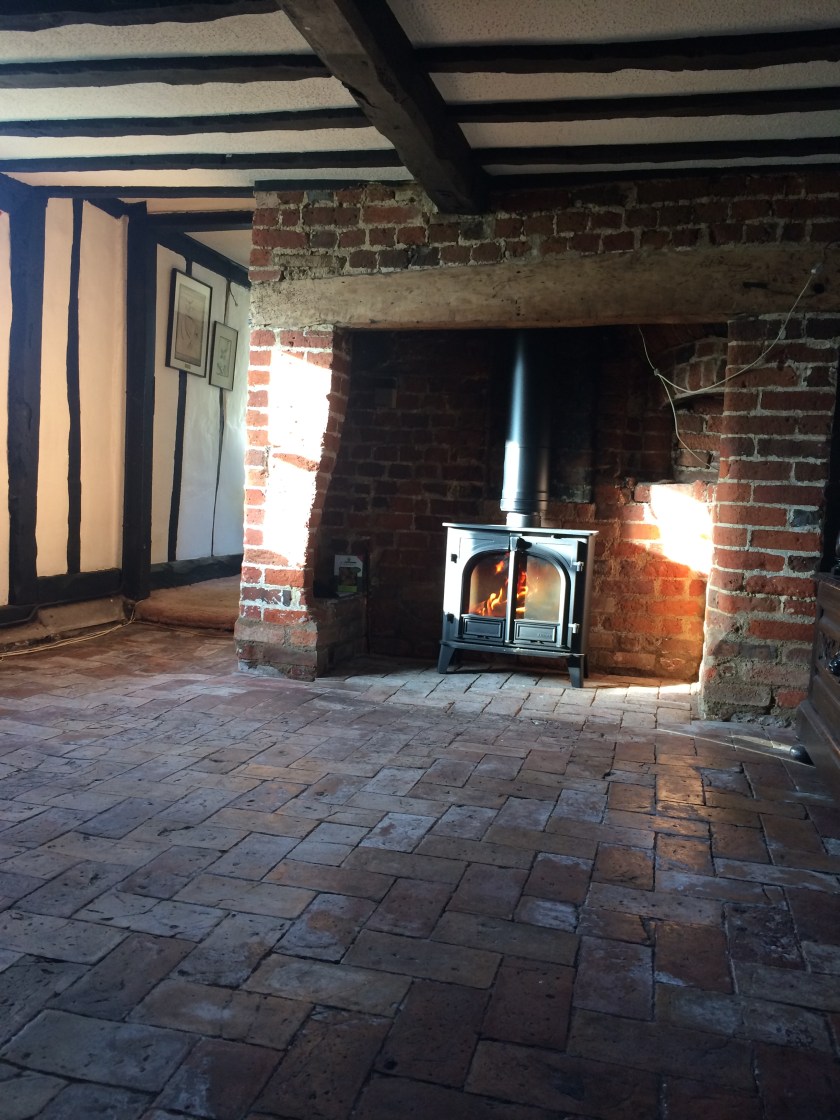
An extensive discussion with the HETAS approved heating engineer convinced us we would have to go for a wood burning stove rather than the open fire we had hoped for. Regulations now require ventilation that was never considered necessary when our house was built centuries ago, we would have needed an open space the size of a large window to allow for a fire in the fireplace the size of ours.
Installing a stove meant taking up the modern concrete tiles in the fireplace and revealing what we thought was a solid base that could take the stove. This transpired to be an old iron fire back placed on earth and nothing else. To ensure we had the right tiles in the fireplace we had to bring forward our plans to lift the existing floor in the hall, a delightful pink carpet, which we weren’t sad to see the back of, and concrete. We were hopeful that we’d find a much earlier floor underneath as we had seen lovely brick floors in other houses locally. We didn’t know though whether they would be in a good enough condition to keep.
We were delighted when the concrete came off and the old brick tile floor was in a very good condition with only a few tiles near the fireplace needing to be replaced alongside the new ones being installed. Our specialist restoration builders JH Building Restoration & Refurbishment did a great job finding a good match. We were helped in knowing the right approach to take by visiting similar aged properties at the Weald & Downland Living Museum where properties like ours are preserved and maintained.
The thatcher finally arrived in April, when the weather was much nicer.
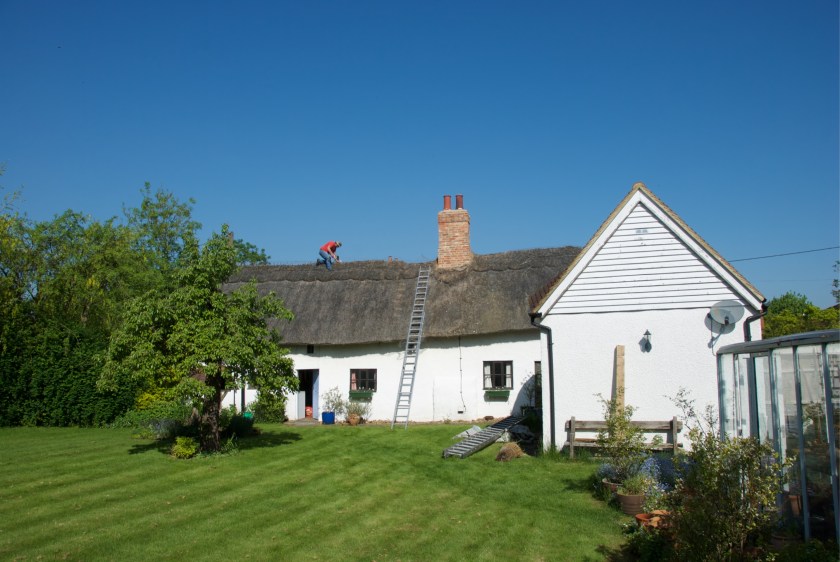
A good thatched roof can last for up to 60 years if you maintain it and re-ridge every 15 years. This was our second ridge but as the front is mainly north facing some of the thatch is rotting and it’s likely we’ll have to have the whole roof done next time. Time to start saving as it isn’t cheap.
With the delay in the extension and the major work on the hall done I’m now looking for the right curtains that will help keep the house warm and complement the old features. I’m also tackling decades of paint on the old doors. Watching paint dry may be a description of boring but watching it peel is absolutely fascinating. I will have one room finished for Christmas.
 From life at the desk to living the dream
I’d like to warm my toes in front of that fire! Would the brick floor have been the original one? I don’t think I realised how old bricks can be!
LikeLike
The original floor was probably beaten earth. We’re not sure how old these bricks are, maybe 200 years or more. You can see the grooves of decades of traffic between the two doorways. There was a brick makers in a nearby village so they may be very local. I have some broken pieces so plan to investigate!
LikeLike