Flying solo

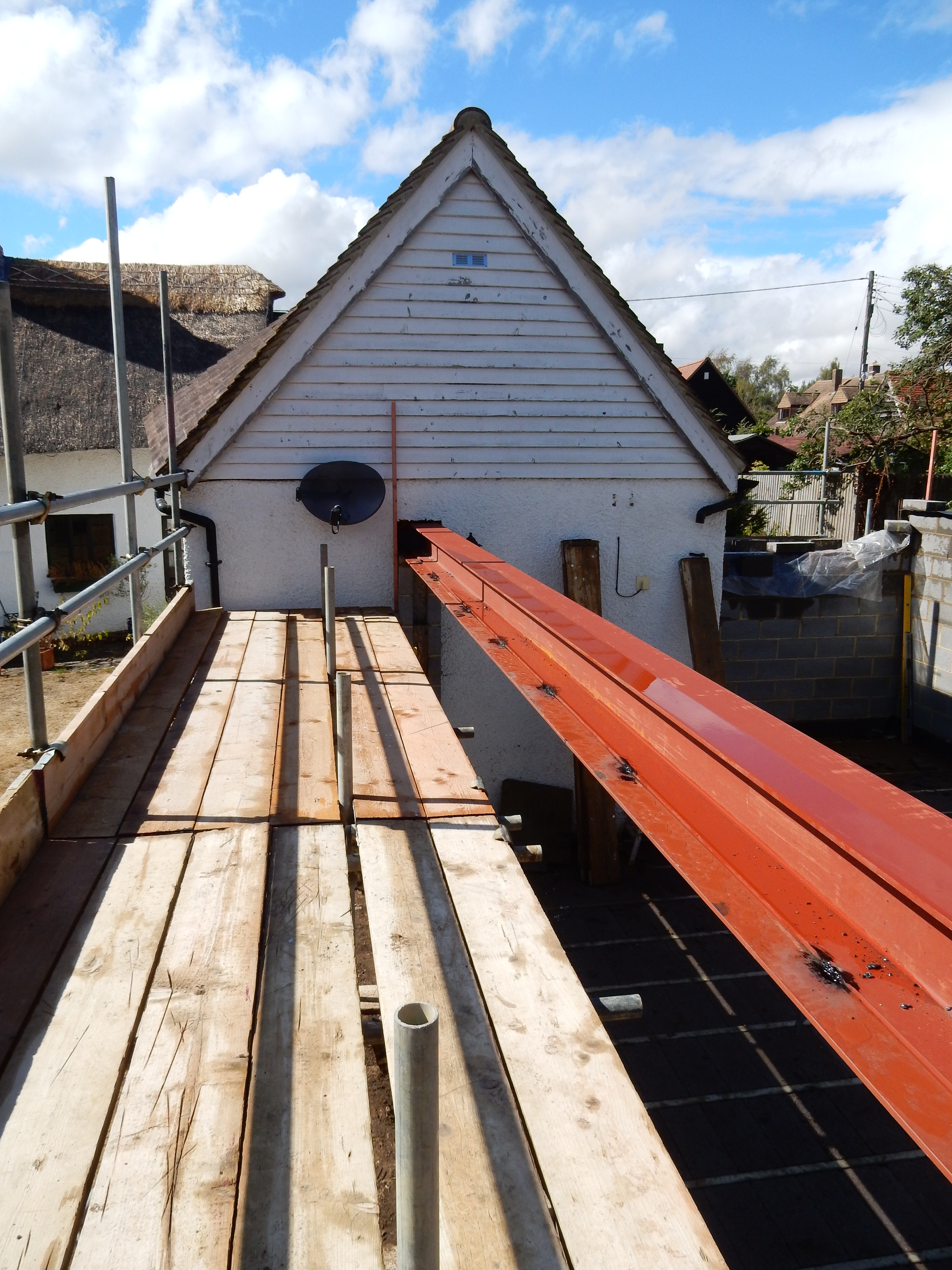
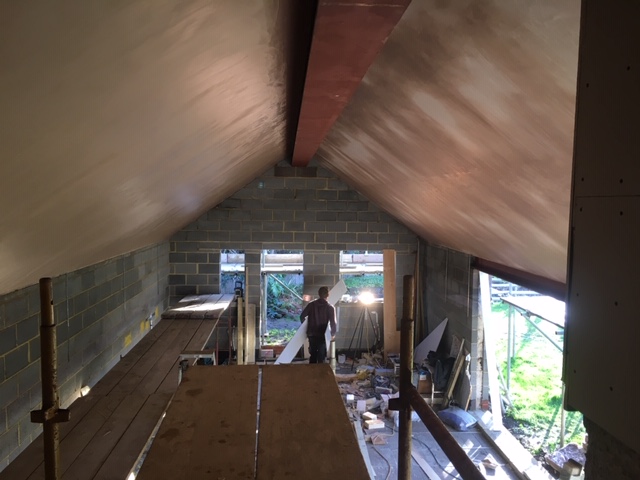
Today was my first time on site in charge without my main builder Ken as back up and expert guide. He and son Joe have done everything they can until the roof is on and the floor is laid and polished. In effect this means they won’t be back until the beginning of January. They did a great job of plastering our ceiling before they went leaving the massive roof steel exposed. It will be a great talking point for our new kitchen!
IMG_5554 (1)
The extension taking shape with a ceiling ready for painting.

I had deliveries of wire mesh and insulation for the floor to manage with neither driver wanting to try and get down our drive. The wire mesh was placed easily on the drive instead of the driver’s first choice of the village green and M and I were able to move it ourselves by hand.

DSCN9205
Wire mesh delivered for the concrete floor thankfully managing to miss the overhead wires.

By the time the insulation arrived I was on my own and the driver clearly thought I wasn’t up to the job of helping him unload. Our roofer Nick kindly stepped in and helped him carry the packs down the drive. They weren’t heavy, just awkward and I would have been happy to do it. There aren’t many women working in this world.

The sliding door frame was installed as planned on Monday and is protected both from the floor installation starting tomorrow and the risk of falling roof tiles. The doors will go in once the scaffolding for the roof is down sometime early in the new year. We’re still on course to finish the main part of the build by the end of January. The plan is for the kitchen and utility room to be fitted in February.

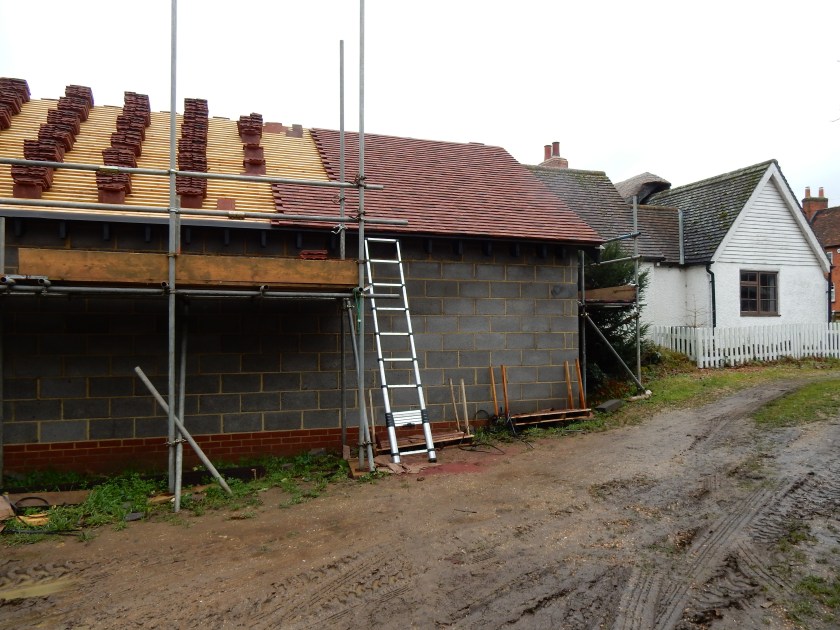
Despite a very dull, grey day the rain held off until mid-afternoon and progress on the roof has been amazing. The hand made clay tiles are just stunning and have been worth the wait and, hopefully, the expense. It’s fascinating seeing it against the three roof types of the existing house as it has evolved over the years – thatch on the original wattle and daub cottage, concrete on the actual smithy when it was converted into a sitting room in the 1960s and machined clay on the 2003 extension. Valuable advice we’ve had on adding to an old building – don’t try and replicate and ensure the different stages in its life can be recognised and understood.
DSCN9210
Finally – great progress on our new roof.

One challenge that has only just reared it’s ugly head is possible theft of materials from site. Our neighbour spotted someone looking around our building site mid-morning yesterday when I was out and the roofers weren’t visible working on the other side of the building. When challenged he went off with his mates in a van. It has spooked us a bit so we’re parking our cars on the drive when we’re not expecting deliveries to make access difficult and are going out and checking everything with a big torch before going to bed. It is a risk. All we can do is make it very difficult for anyone to make off with stuff.

On a more positive note we pick up our new ‘blacksmith special’ curtain poles for the hall on Friday and the beams are being stripped of decades of paint next week. I’m making slow progress on the hall doors and have nearly finished one. The original wood looks like oak and because of its age it has dried out a bit. Our local wood reclamation yard has recommended Fiddes supreme wax polish to help feed and restore it. Another task before Christmas as we’re going to use our hall as our dining room given the extension won’t be finished which had been our original plan for Christmas this year.
Full steam ahead

It’s been all go these last couple of weeks and very busy on site so not much time to blog. It’s also validated absolutely our decision that one of us had to give up work and be here and available 24/7 to handle the stream of questions and follow up actions to make sure we get the build we want and not someone else’s best guess.

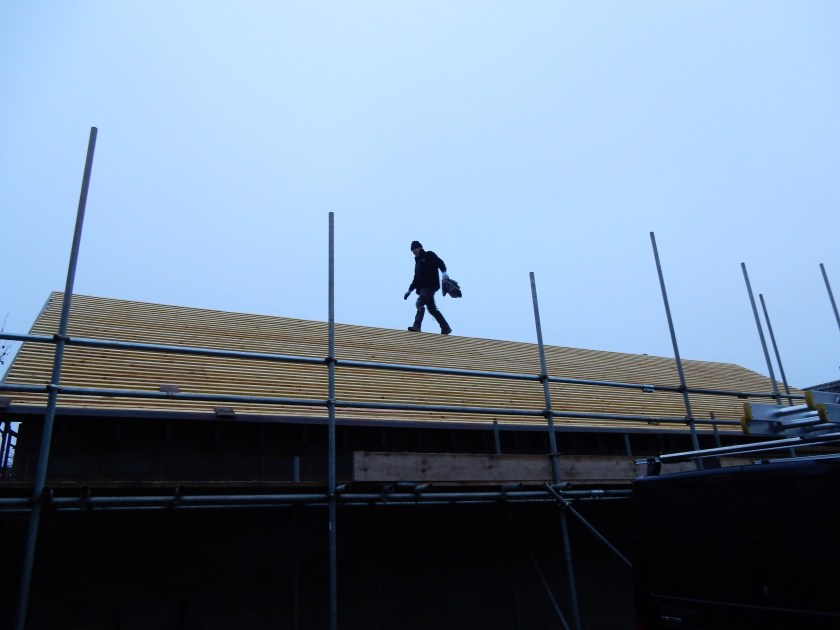
Roof first. After the beam was finally put in place the rafters went on in a day. The infilling, roof felt and batons took longer and are now ready and waiting for tiles. As these are hand made clay they’ve been a special order and won’t be ready until later this week.

Roof complete with roofer!
The tiles should have been on and the roofer finished before the installation of the sliding door frame and floor. There won’t be time for that as the floor contractors arrive on site on 6 December. I’ve managed to push the door company back to Monday 3, that gives just two days to get the tiles on immediately above the door frame.
 
Our builder Ken will have to create a cover to protect it from falling tiles. Not ideal but the only alternative would have been to push things back another month and delay the floor and doors until after Christmas. As we’ve already lost over two months due to going back through planning to raise the roof height 300mm we’ve decided to push on and hope for the best. The good news last week though was that our application for the roof had been approved. Relief as it was half built by the time we got the decision!
 
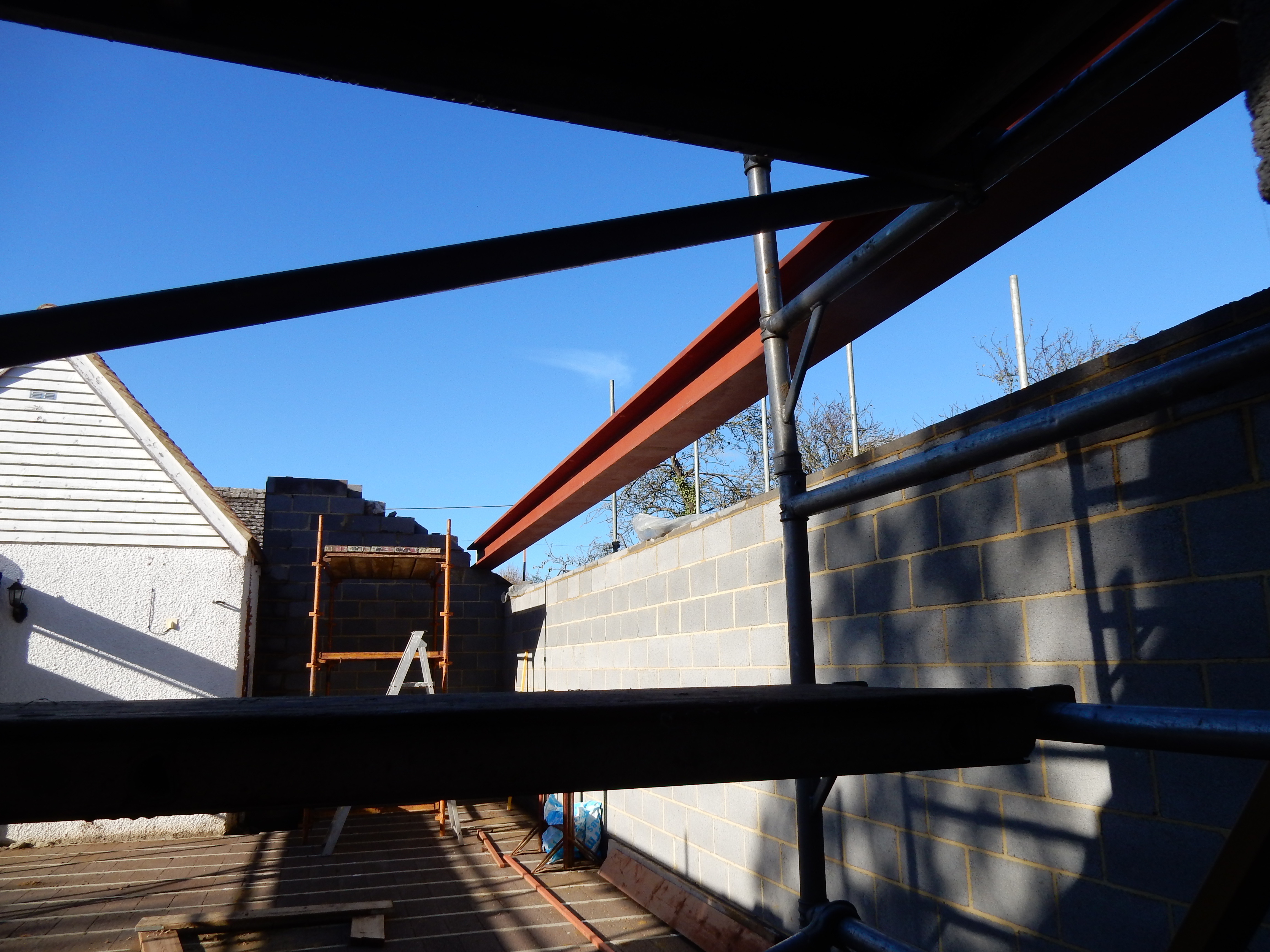
View from the inside looking out through the opening where the sliding doors will be.
As we’re having a polished concrete floor with embedded underfloor heating a number of services have to be fitted before the concrete is poured. The plumber was on site last week fitting pipes and marking up where the sinks, toilet, hand basin, etc are going. Making decisions on which side you want the drainer when all you have is a building site has stretched the imagination a bit. We’ve also agreed to take out an internal wall between the toilet and what was going to be the boiler room by placing the boiler and hot water tank in the same space as the downstairs toilet. Boxed in it will have the same effect as being in a separate room and frees up a bit more space for the pantry.
 

One big challenge is our current gas supply isn’t sufficient to service the new extension at the same time as maintain heating and hot water in the old house. It took me a day of talking to gas distributers and our supplier, British Gas, to find the right person to arrange an upgrade for our current metre. I’m now waiting for a site visit and no doubt a quote for an additional cost.

As the work speeds up so the money rushes out of the door. I spent a day with my spreadsheets making sure I’d captured every element and although we’re likely to go a bit above our original budget it doesn’t look like we’ll be far out which isn’t bad.

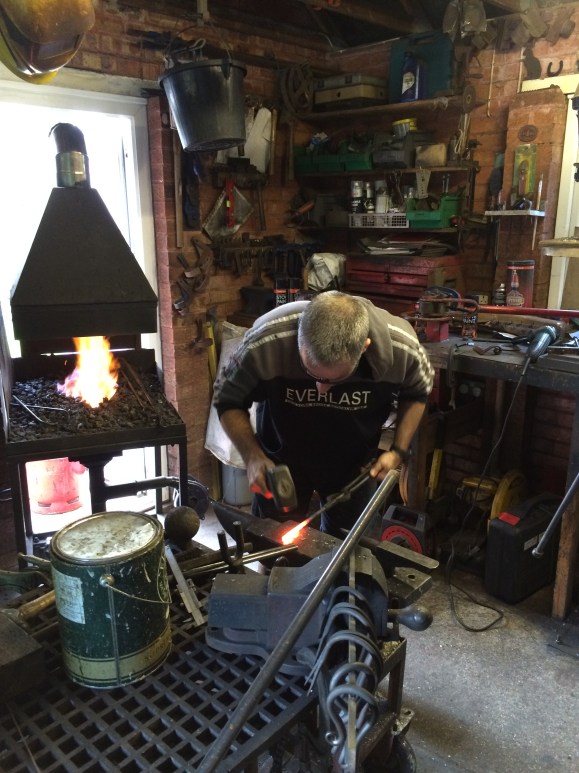
While work continues outside on the extension I’m also getting on with finishing the hall in time for Christmas. We’ve ordered the curtains from Cool and Classic, a small independent curtain shop in Bedford who found just the material we were looking for. We’re getting our curtain rails made by a local blacksmith so they can fit alongside our awkward beams and misshapen walls. It also feels right as part of our sitting room was the village smithy 100 years ago.

This image has an empty alt attribute; its file name is img_7888-1.jpg
Our local blacksmith making a curtain pole holder for us to try out for size.

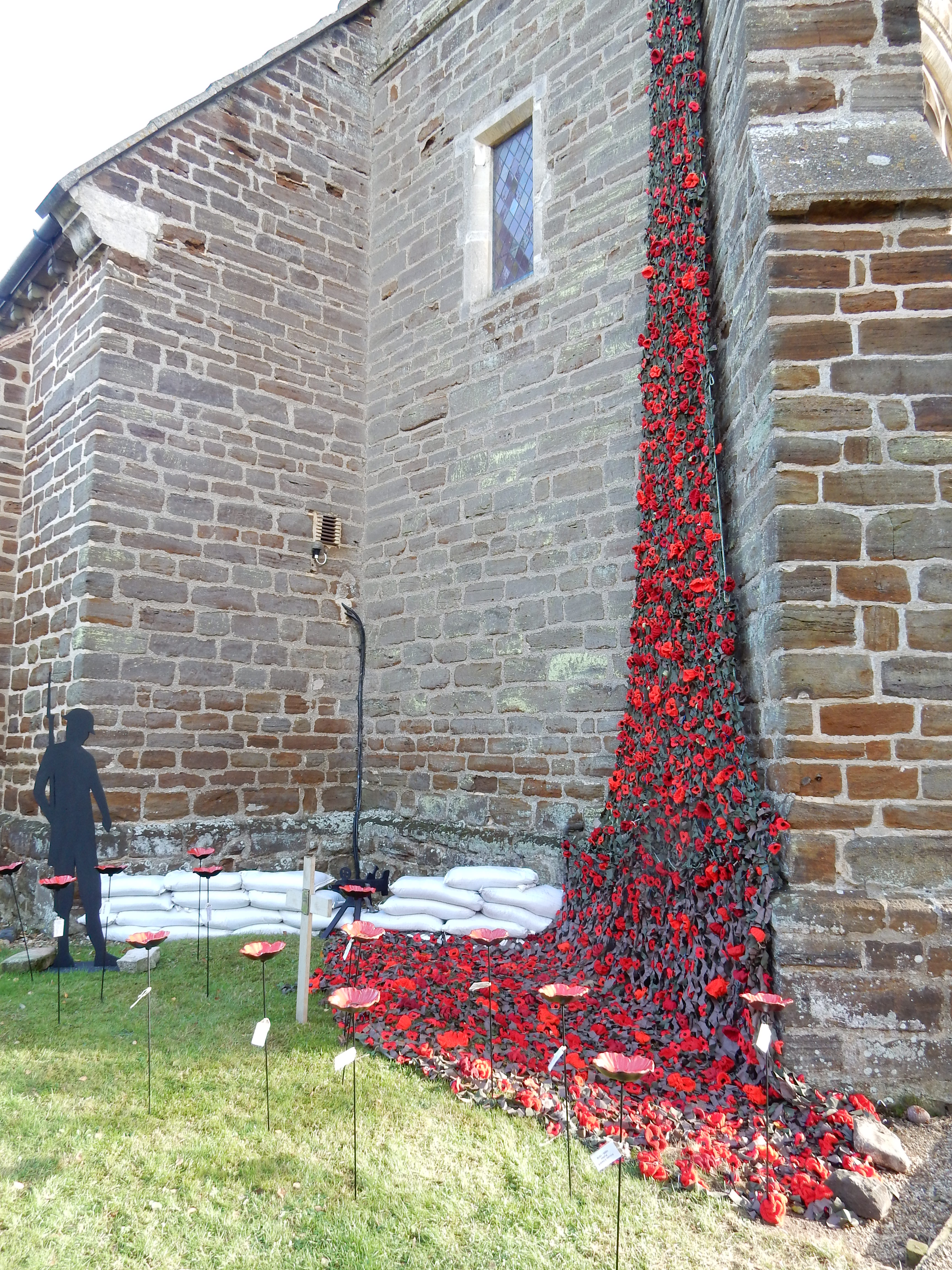
In other news the village event to commemorate the WWI armistice went very well with over 250 visitors on the Saturday to the exhibition in the church and a packed remembrance service the next day. We included the story of my grandfather who fought at Arras and the recently discovered story of M’s great uncle who worked in supplies during the war. My contribution – tying on many knitted poppies to the camouflage netting that hung down the side of the church tower.

DSCN9028
Ceramic poppies commemorating the nine people from our village who lost their lives in WWI.

Nightmare on the High Street

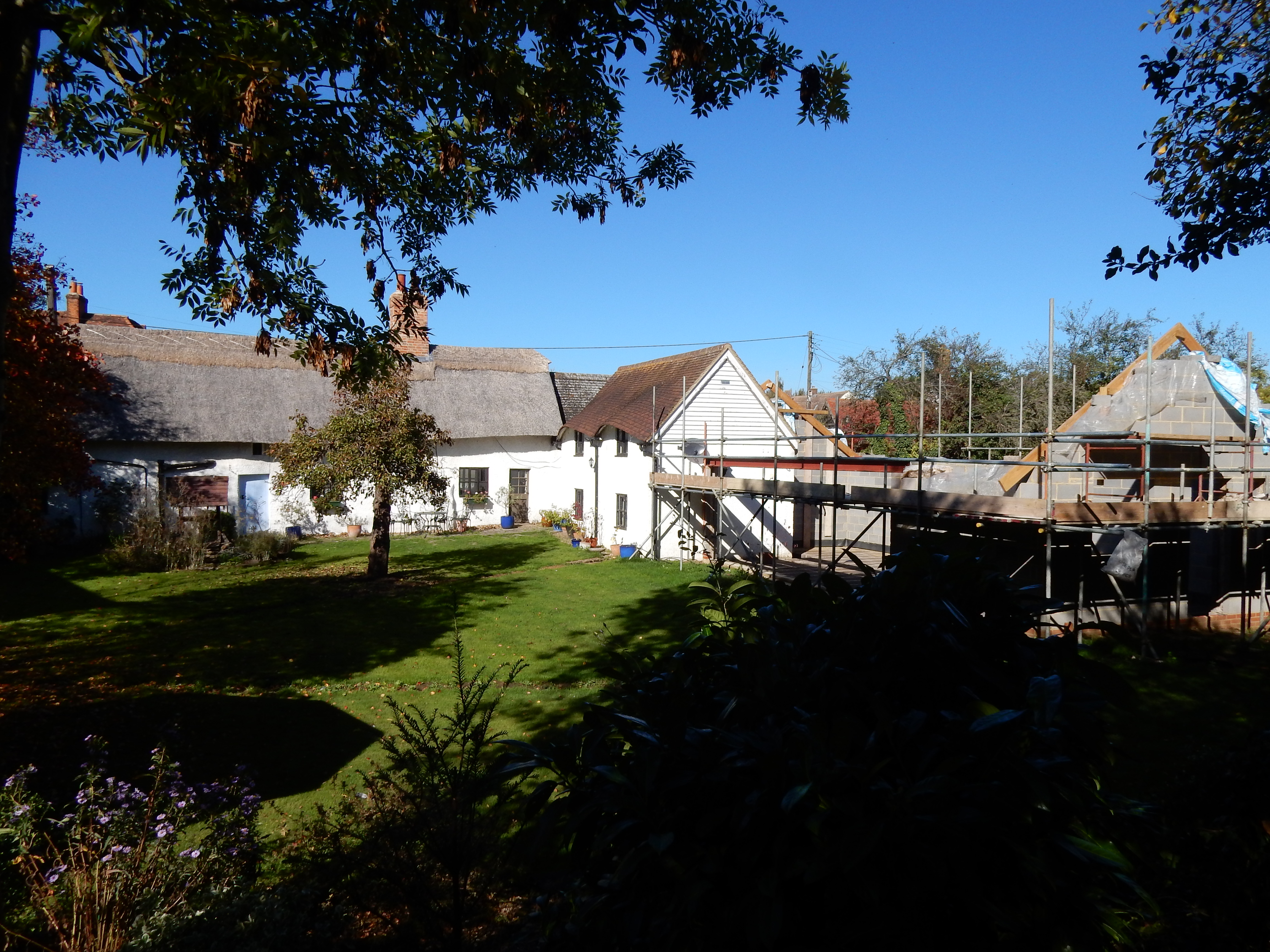
Finally work has re-started on our extension. It’s been a nerve-racking couple of weeks, nothing to do with Halloween and all to do with massive lorries trying to access our site, a 90 degree turn off the village high street.

Consultation on our listed building application to raise the roof by another 300mm closed on 26 October with no objections. Although the formal decision from the Council isn’t due until 21 November we have decided to go ahead anyway. We believe it’s a small risk it will be rejected and we want the roof on before Christmas and the increasingly bad weather affects the build.

So the roof steel was delivered last Tuesday along with the wood for the rafters. Unfortunately the crane wasn’t strong enough to lift the 13m long, 3.5 tonne steel into position. Instead it was left balancing at the bottom of the two gable ends, tantalisingly short of the top.

DSCN8938
Our roof beam resting at the bottom of the gable end, not at the top where it should be.

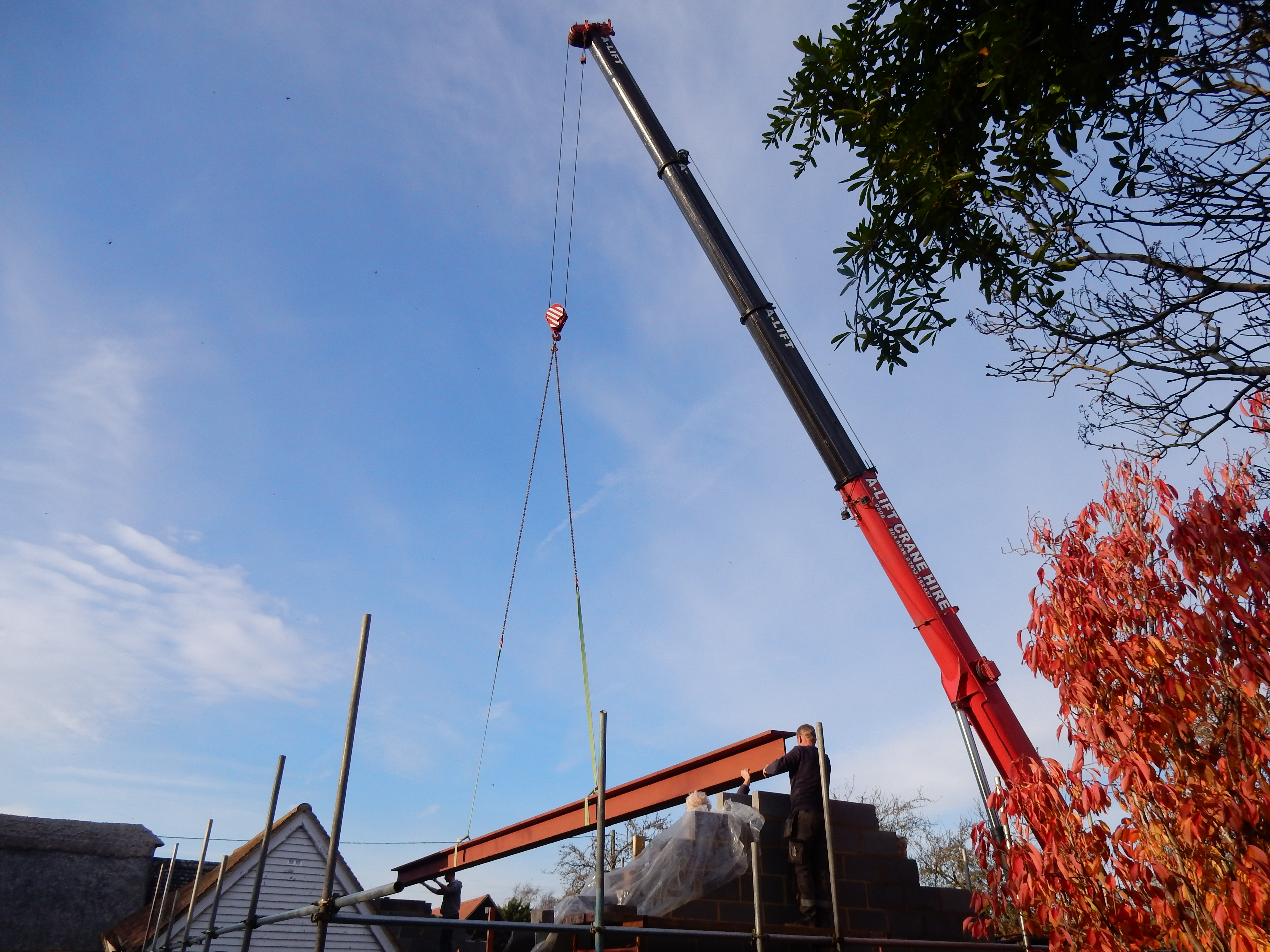
This is the biggest steel our builders have handled and for the rest of the week they were contacting numerous crane companies to find one that could both access our site and lift the beam into position. On the sixth attempt a crane arrived this afternoon and, thankfully, job done.

DSCN8955
Finally, the roof beam being lowered into place.

Unfortunately I missed all the excitement as I was fixing poppies to a massive camouflage net which will drape our church tower this weekend for our village’s WWI remembrance event. Thankfully M was working at home today and nipped out to take pictures.

It will now be a rush to get the roof on before the frame for the sliding doors is fitted the week beginning 26 November with the flooring company arriving on site on 6 December. It’s advisable to get the roof finished before this work starts to avoid damage from falling roof tiles. Our builder Ken reckoned it would take about four weeks to finish the roof but I’m not sure that allows for his son taking a three week trip to the Far East. He has two days to get the carpentry done before he takes the plane to Hong Kong!

In other village activity I carved my first pumpkin for Halloween and made pumpkin pie. Nice, but I think I’ll do soup next year. The sweets went down well with the kids although with some left over it has not helped the diet.

dscn8915-e1541438302836.jpg
Pumpkin lit and sweets ready for Halloween, more homely than scary.

Focus on the hall

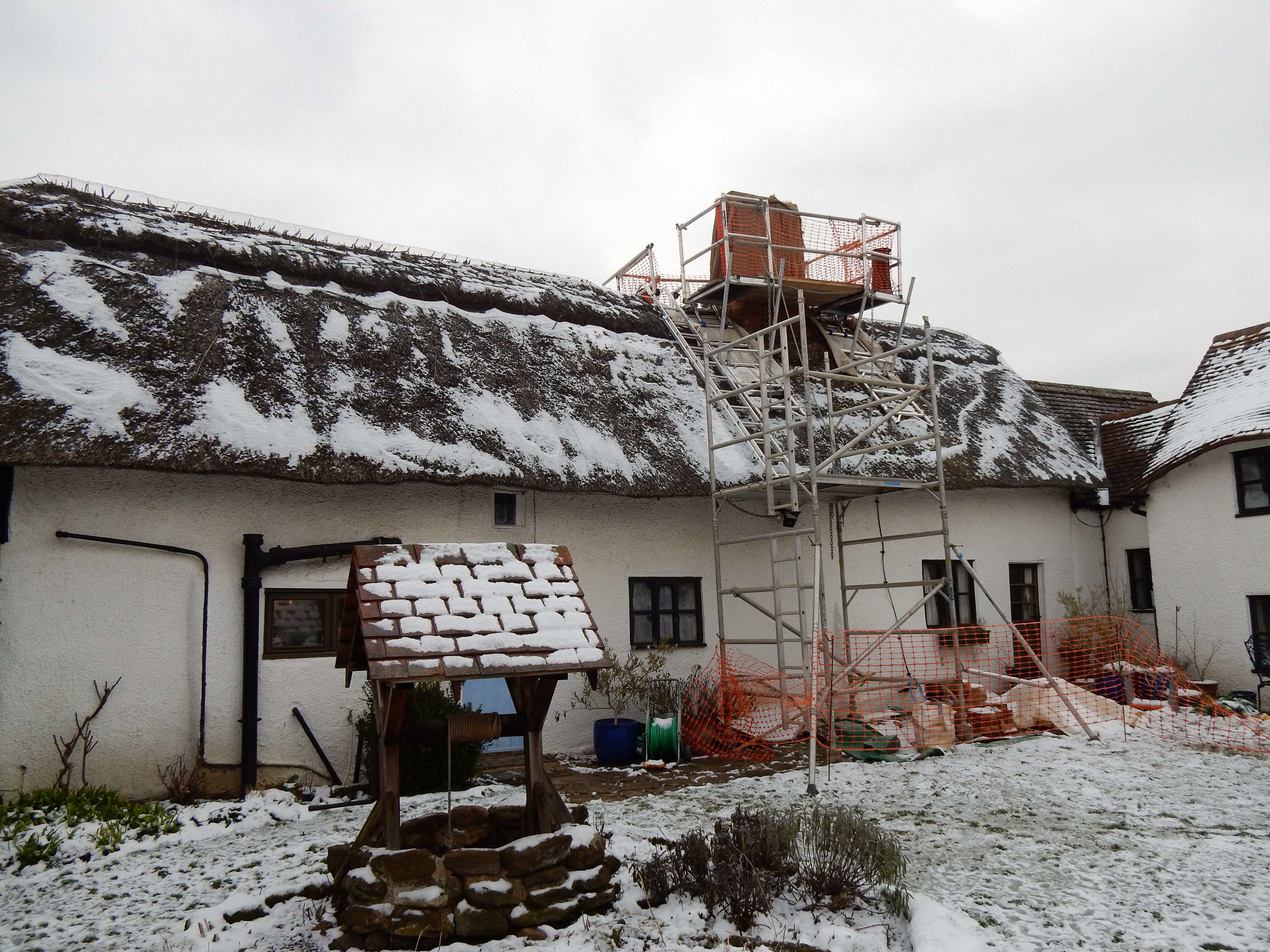
Our initial plan had been to leave everything to do with the old house until after the extension was finished. However, last year it became clear our chimney was in a precarious position with growing foliage and crumbling bricks.

IMG_7402 (2)
The chimney at a precarious angle in December 2017 – would it last the winter?

We needed a new ridge on our thatched roof so it made sense to get both done at the same time. Thatchers are in short supply and book up to a year or more in advance. We had ours arranged for March which meant the builders needed to fix the chimney by February. I spent a nervous winter expecting after every high wind to find our chimney in the garden!

February came with the chimney still attached to the roof. The bricks were so rotten the builder had to rebuild the stack from about half a metre below the ridge height. Unfortunately for him he was working on it when the ‘beast from the east’ bad weather was at it’s height. All credit to him he only missed one day because of it.

DSCN6213

It’s often the case with old houses that you start with one thing that needs doing, in our case the ridge, and quickly find it expands to include other work that has to be done. As we were getting the chimney done we decided we should get it lined for a real wood fire at the same time. Essential to prevent the thatch catching light and for the insurance.

An extensive discussion with the HETAS approved heating engineer convinced us we would have to go for a wood burning stove rather than the open fire we had hoped for. Regulations now require ventilation that was never considered necessary when our house was built centuries ago, we would have needed an open space the size of a large window to allow for a fire in the fireplace the size of ours.

Installing a stove meant taking up the modern concrete tiles in the fireplace and revealing what we thought was a solid base that could take the stove. This transpired to be an old iron fire back placed on earth and nothing else. To ensure we had the right tiles in the fireplace we had to bring forward our plans to lift the existing floor in the hall, a delightful pink carpet, which we weren’t sad to see the back of, and concrete. We were hopeful that we’d find a much earlier floor underneath as we had seen lovely brick floors in other houses locally. We didn’t know though whether they would be in a good enough condition to keep.

We were delighted when the concrete came off and the old brick tile floor was in a very good condition with only a few tiles near the fireplace needing to be replaced alongside the new ones being installed. Our specialist restoration builders JH Building Restoration & Refurbishment did a great job finding a good match. We were helped in knowing the right approach to take by visiting similar aged properties at the Weald & Downland Living Museum where properties like ours are preserved and maintained.

IMG_7621
The hall floor revealed with the new stove lit.

The thatcher finally arrived in April, when the weather was much nicer.

IMG_4912
Rather him than me as I don’t like heights. Note the lovely new, sturdy chimney!

A good thatched roof can last for up to 60 years if you maintain it and re-ridge every 15 years. This was our second ridge but as the front is mainly north facing some of the thatch is rotting and it’s likely we’ll have to have the whole roof done next time. Time to start saving as it isn’t cheap.

With the delay in the extension and the major work on the hall done I’m now looking for the right curtains that will help keep the house warm and complement the old features. I’m also tackling decades of paint on the old doors. Watching paint dry may be a description of boring but watching it peel is absolutely fascinating. I will have one room finished for Christmas.

Treading water

DSCN8827

Unfortunately still no progress on the ground and none imminent as our listed building application to increase the roof height wasn’t validated until 26 September. The clock only starts ticking at that point although it was received on 23 August. With a month for consultation and nearly a month before a guaranteed decision we are in danger of no significant action until the new year.

An option is to proceed at risk in anticipation that we will get the approval. We really want to weather proof the extension before winter sets in. At the moment I’m planning to get the builders back after the consultation period expires on 26 October and rely on our planning agent getting the informal okay from the planning case officer even if we don’t officially hear for another few weeks. It is a bit nerve wracking making arrangements before we know the final decision but, given it’s only a 300mm increase in height and our local Parish Council had no objections at their meeting last week, the risk should be minimal.

Our experience when we submitted our original planning application was that the conservation and design officer is the key decision maker. So I’m going to try and get hold of them to get an early view as to whether or not they think the increased roof height is going to be a problem. If they’re okay with it then we should be safe to go.

An added challenge is we’re now moving into the phase of multiple contractors. Our builder needs to get the roof on before the sliding doors and floor can be installed. I need to book them all in now if I’m to stand any chance of getting the work done this side of Christmas. Both the door and floor suppliers are provisionally slotted in for the weeks beginning 26 November and 3 December respectively. The door frame needs to be fitted first then the concrete poured. The sliding doors can only be fitted once the concrete floor has been polished about two weeks after it has been poured. So, if we’re lucky, the doors might just go in by 21 December. If it all comes together it will certainly be Christmas cheer all round!

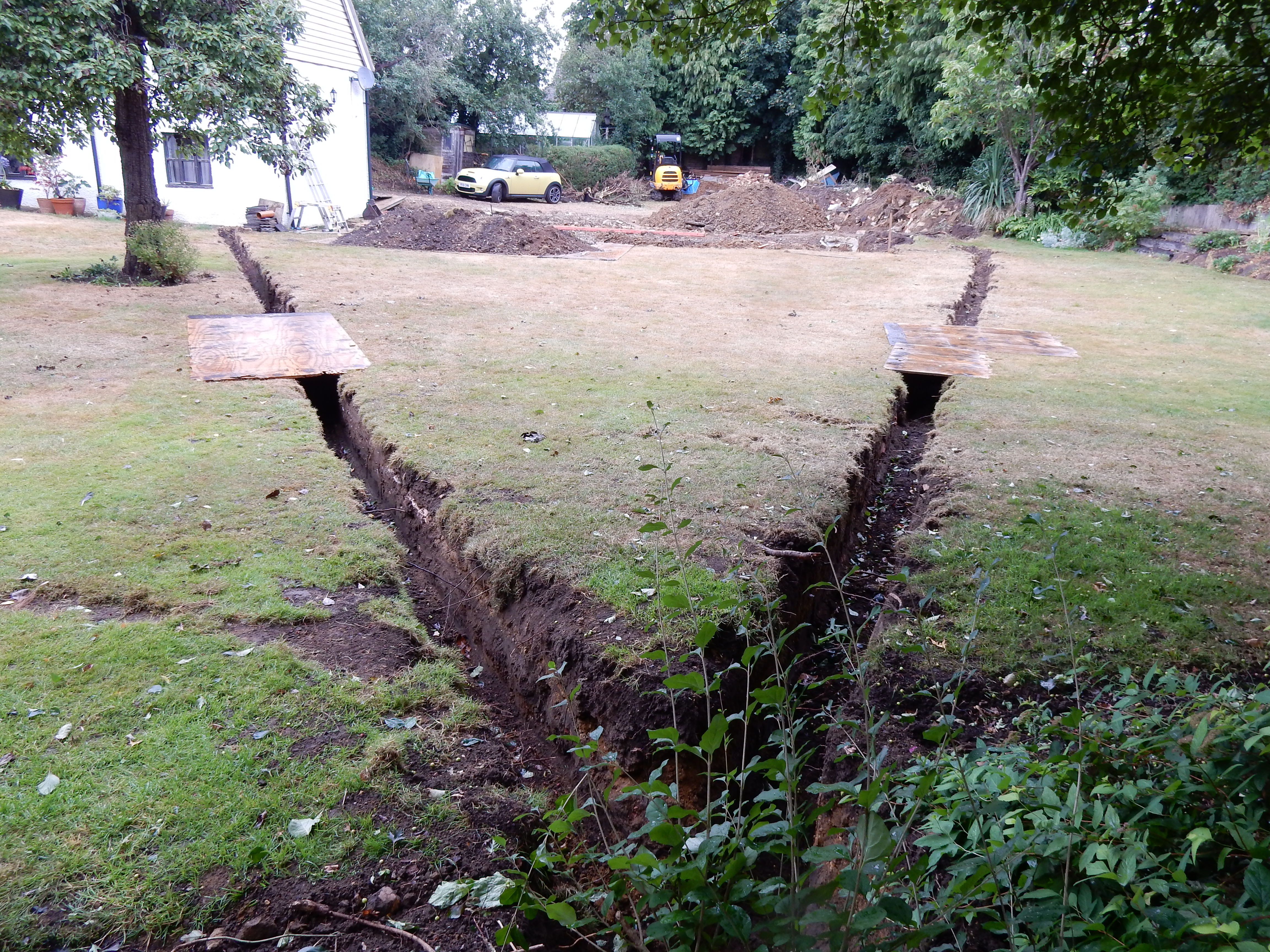
In the meantime there’s plenty to be getting on with. We’ve been cutting back and tidying the garden for winter and trying to keep on top of the never ending fall of leaves. Beautiful, but a magnet for slugs and snails and damaging to the lawn although they do help mask the two drainage trenches dug a couple of months ago.

DSCN8828
Autumn in our back garden with the leaves masking the new drainage trenches.

There are also things we can be getting on with in the old part of the house. Something to update you on in my next blog!

Maintaining momentum


DSCN8802
The unchanging view from the existing kitchen – at least the grass is green again!

It is a bit demoralising looking out at the scene of a part built extension. There has been no demonstrable progress in almost a month.

The priority is to try and maintain momentum but it is difficult when you’re waiting for others to do their stuff. I keep nudging our planning/design agency who keep hassling the local authority planning department. The target date for a decision on the non-material amendment to the full planning application to amend the roof height is this Thursday. However, there is no sign yet of progress with our listed building application to make the same change, which we believe needs to go out to full consultation. Our builder Ken is continuing to be exceedingly patient.

So I’m focusing on other elements of the project. The company making the sliding doors that will open out onto our garden have been to measure up and I’m waiting to sign off their designs. I’ve updated the concrete flooring company on the delay and given them the measurements for the floor insulation.

We are continuing to work on our kitchen plans and have now spoken to a number of kitchen companies/designers and are getting quotes. We won’t make a final decision until the floor is in and we’re certain on the colour scheme. So there’s not much more we can do as the floor will only be laid once the track for the sliding doors is in place and that can’t be done until the roof is on. All roads lead back to the local planning department!

So what of the other aspects of living the dream? I now have more headspace to plan in the things I said I never had time for when I was working. I’m back swimming and going to Pilates once a week. I’ve signed up for French lessons and I’m actually enjoying having homework to do!

We haven’t done much of the travelling yet as we’re still really tied to home in the hope that work will restart soon. We did have three days in Paris at the end of August, no need to worry this time about what the builders were up to!

We wandered around Montmartre, took a river trip on the Seine and enjoyed a fabulous tasting menu at a Bib Gourmand listed restaurant Le Reciproque. A perfect way to celebrate our tenth wedding anniversary.

l_m274
29 August 2008

… and the not so good news

Well, we’ve hit our Grand Designs ad break moment and the – what’s going to happen next question. It’s all to do with the roof.

Our planning application had the extension roof height at 4.2m. The Building Regs, which flesh out the plans in more detailed and have also been signed off by the local council, set the roof angle at 29 degrees to come in at that height. Separately, because we are grade II listed and in a conservation area, we have a number of planning conditions. One is that we have to use hand made clay tiles for the roof. The minimum angle these can be laid on a roof is 35 degrees.

So we are between a rock and a hard place with requirements agreed by the Council that are contradictory. We researched our options and drew on central government guidance to understand what we had to do.

The advice is to make a non-material amendment and the guys handling our planning said this would normally take around four weeks. However, we’re a listed building, so the Council planning team confirmed we would need to complete a full listed building application as well as a NMA which would take at least six weeks. All this to get the roof height raised by 300mm!

DSCN8093
It’s all in the angle – working out the impact of an increased height of 300mm, thankfully still lower than the existing roof line.

We could proceed at risk and hope the Council never check. If they did follow up, however, we could be asked to make a retrospective application or, even worse, take the roof off and rebuild it. This was a real dilemma as it meant stopping work while we went back through the planning process as the roof is the next thing to be done.

After a few days of talking to builder Ken, our structural engineer and the local planning department we have decided to do this properly and get the necessary permissions to increase the roof pitch to 35 degrees. Ken has been great given he only does one job at a time. Thankfully he was able to bring another job forward so they finished off the walls, tidied up and left the site. They did put in two roof supports at 35 degrees to build the gable ends, hopefully they won’t have to redo them!

DSCN8247
Next step a roof, albeit a bit delayed.

The application went in last week and we wait to hear.

Initially we were very disappointed. Everything had been going so well. Now we see this as an opportunity to use the time to plan for the detailed finishing touches, not least our new kitchen.

DSCN8253
Marking out the new kitchen complete with the pipe already installed for the extractor duct!

We have resigned ourselves to the fact that we won’t have our new kitchen until next year and, although this is a long way off, planning the detail now means we can get the infrastructure right for when it is installed.

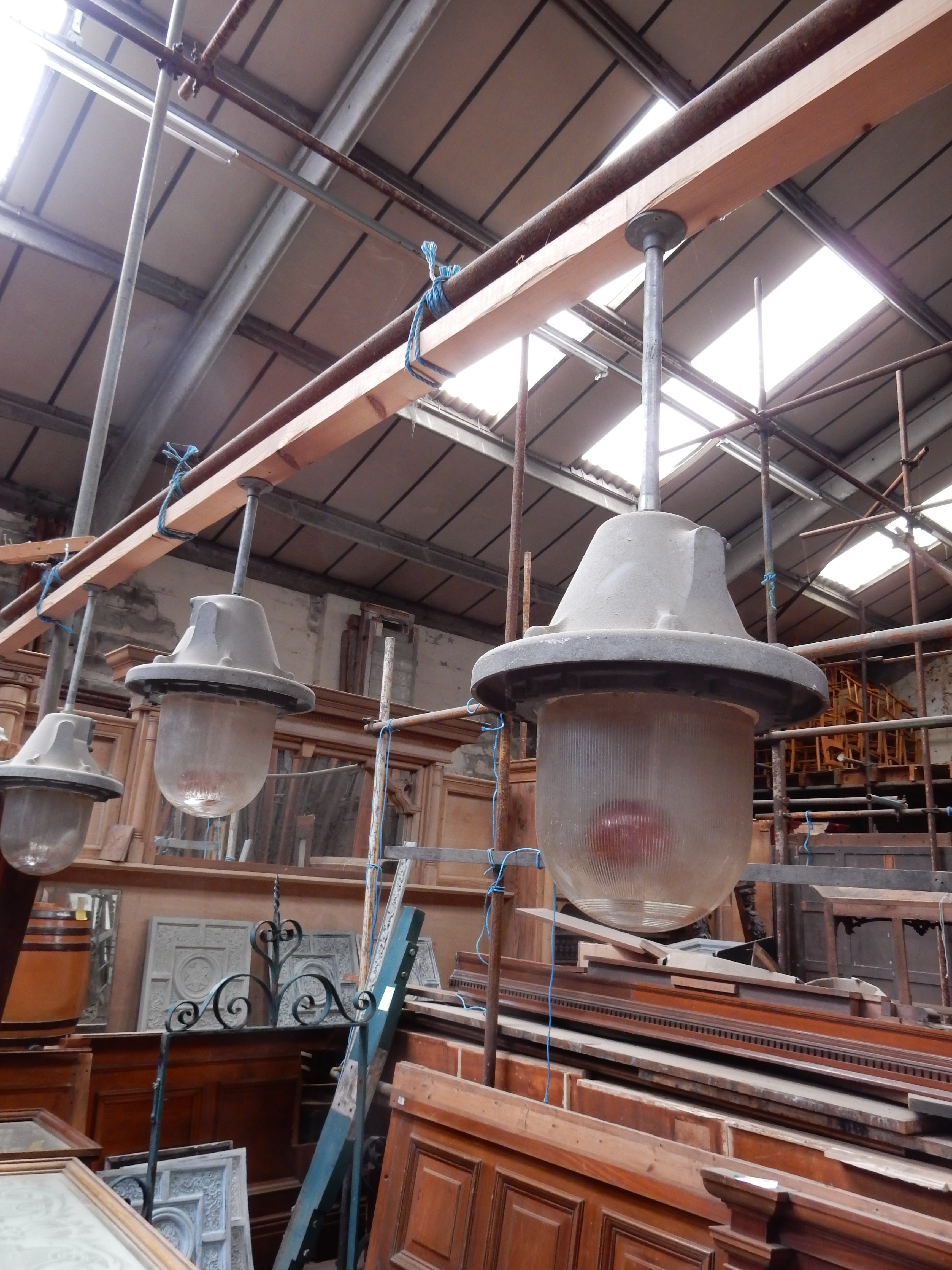
For a while we’ve been working on an industrial look inspired by a local café and finding an old metal cabinet in a reclamation yard. Looking at design ideas and kitchen options it seems that’s now very ‘on trend’ although we feel we got their first!

We’ve been looking for the right lighting to express this style. It may seem odd thinking about that now but it’s quite key in terms of the wiring and also ensuring there’s a strong fixing if we do go for something reclaimed from an old factory or warehouse, which is one of the options.

DSCN8297
Industrial lights at Robert Mills in Bristol

We found a couple of great places in Bristol and we stopped off at both on our way to Wales last weekend. First an amazing place that restores fifties English Rose kitchens made by the company that manufactured Spitfires and Lancaster Bombers during the Second World War. After the war they were left with a surplus of aluminium, a factory and a workforce and began making modular, fitted kitchens instead. Source is the place to go and they also do amazing lights with a very entertaining owner who has been in the business for decades and knows the source of every item he has to offer.

The other treasure trove was Robert Mills one of the largest and oldest suppliers of original architectural antiques in the UK. We discovered this in Reclaim, a magazine I’d never come across before and which is a mine of information and ideas on using reclaimed materials in decorating your home.

Now we feel we have too much to choose from and don’t know how we’ll ever make a decision. We’re relieved that the deadline has been postponed for a bit!


Good news …

Well back from Arras and we needn’t have worried. When we left the footings were in place with the concrete bricks for the foundations and breeze blocks for the walls ready to go.

DSCN7880
The footings.

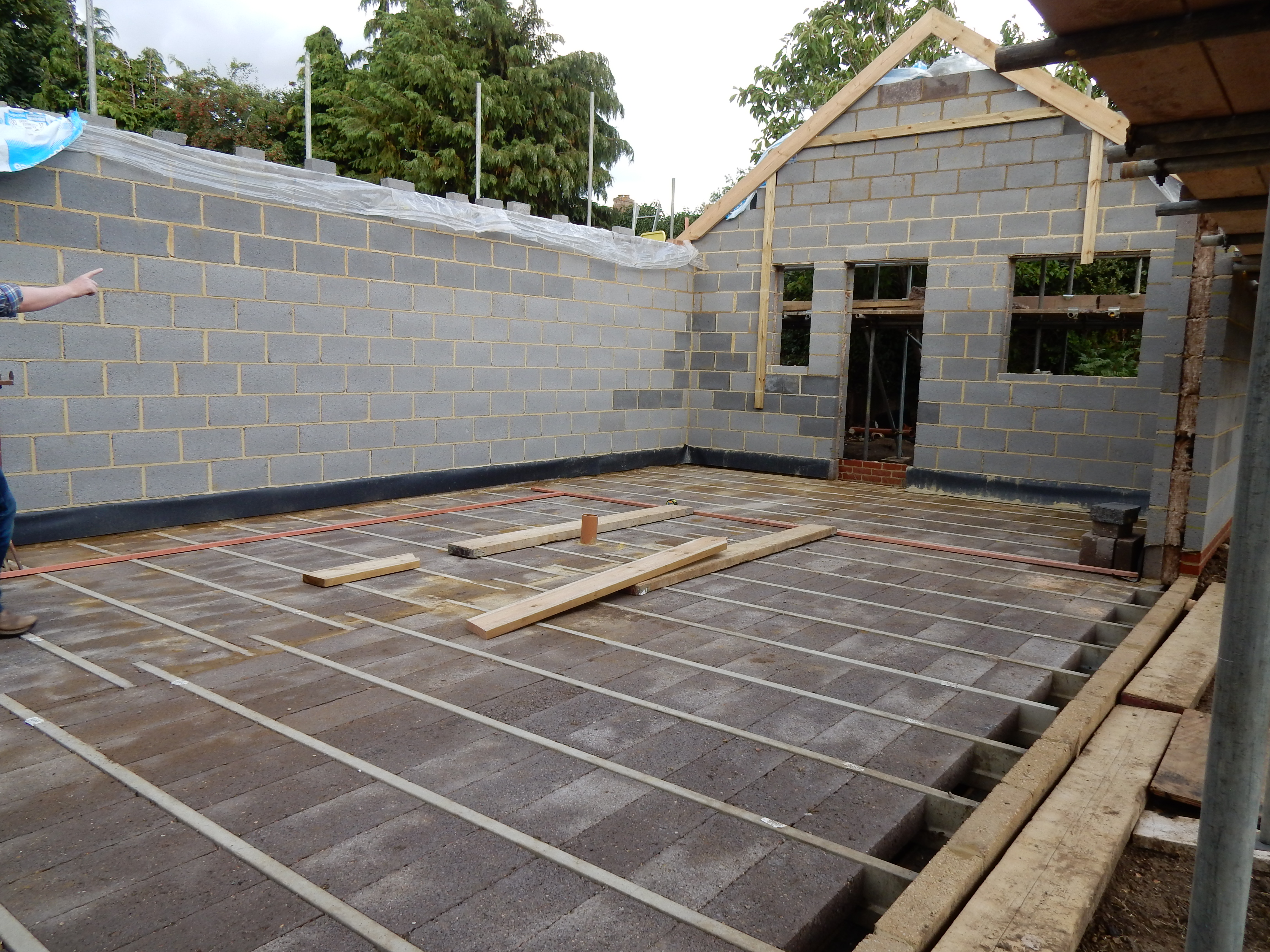
By the time we came back three days later the walls were well under way. They had even remembered to install the extractor duct for the cooker that we want to run down under the units and the floor rather than up through the roof. The openings for the sliding doors from the kitchen and the windows and the door from the utility room at the back were also materialising.

DSCN8072
The extension starts to take shape with walls, doorways and window openings.

The drainage pipes were neatly lined up on the lawn ready to be installed and connected. When fitted a water test proved the calculations were right and it all flowed smoothly to the manhole the other side of the garden. One challenge successfully overcome.

Another big challenge for Ken and his team was the delivery and installation of the 1 tonne steel beam over the space for the sliding doors. They didn’t even want to think about what would happen if the lorry couldn’t reverse down our drive. Thankfully we didn’t have to go there and it was successfully levered into position onto two supports inside the emerging extension.

DSCN8103
The steel swings gracefully over the extension back wall.

That was only part one. Once the wall had been built up to roof height they then had to lift and manoeuvre the steel into place – this time without the help of the lorry’s mini crane. It was at this point it decided to pour with rain. Undeterred they gradually positioned it onto a small winch and with four of them lifting, nudging, shoving and probably praying it finally slotted into the hole they had created in the end of the existing extension and rested gently on the breeze block wall at the other end. I watched heart in mouth from the existing kitchen out of sight as I didn’t want to distract them.

DSCN8198
Steel beam over the sliding doors safely in place.

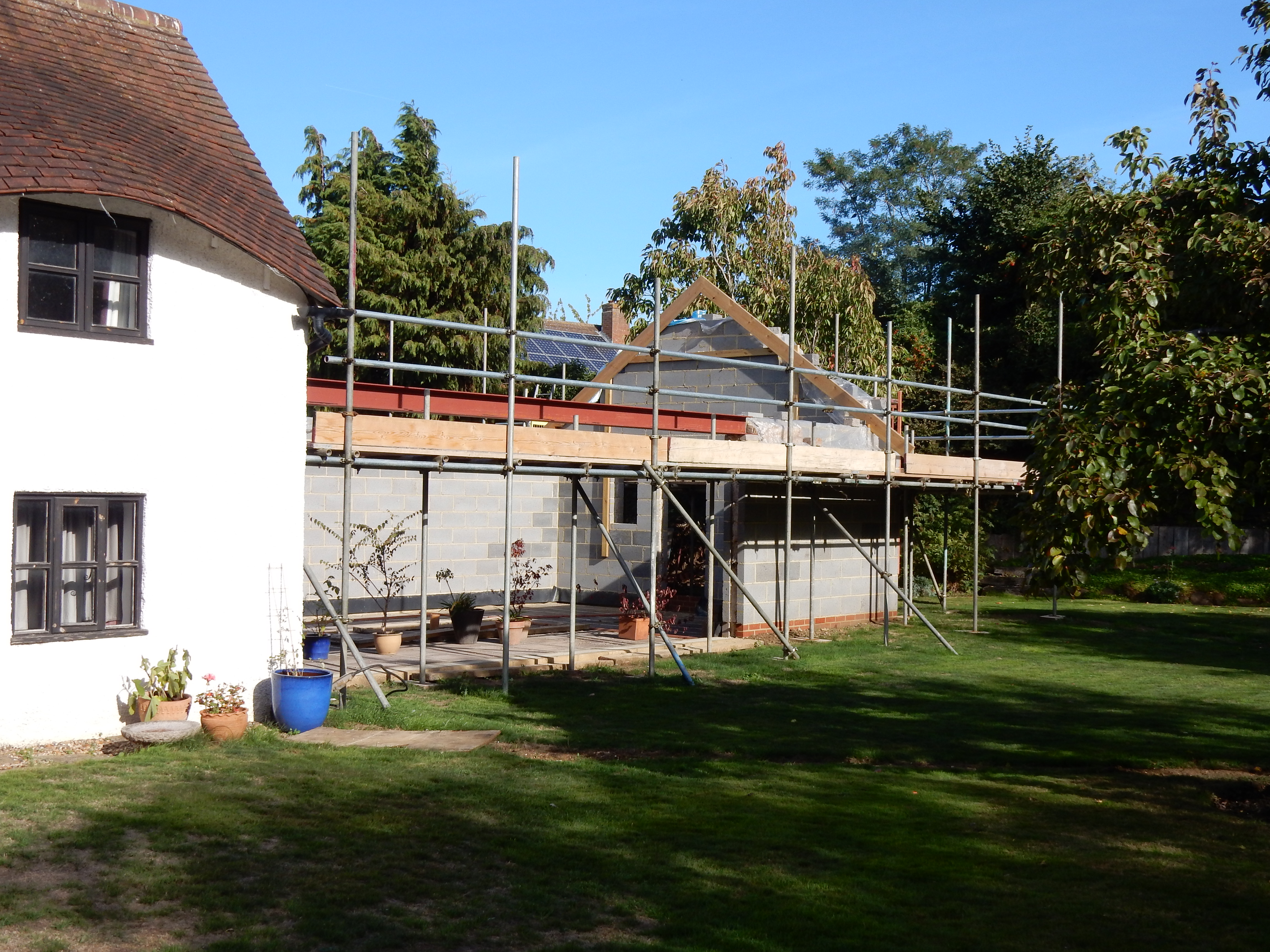
So in a week the walls have gone up, one of the two main beams is in and the scaffolding is in place ready to build the two gable ends and start on the roof. Amazing progress. What can stop us now?!


Leaving the build

We’d committed some time ago to going away the first three days in August. We were looking forward to it although we didn’t really want to leave the build. It was the first time the builders would be left to their own devices. What would happen? What would we come back to? We left contact numbers and urged them to call about any query at any time. As we drove off our anxiety levels rose.

We were heading off to Arras in northern France for three days on a trip with my sister and her family. Our grandfather had fought there in the First World War. With the aid of his diary and some great research by my brother we planned to visit places he had been when he was a wireless operator supporting an artillery battery at the front during the battle of Arras. I had attended the 100 year anniversary commemorations last year on 9 April with my two brothers but had not had time to visit any of the sites or memorials hence the decision to go back with my sister.

DSCN4156
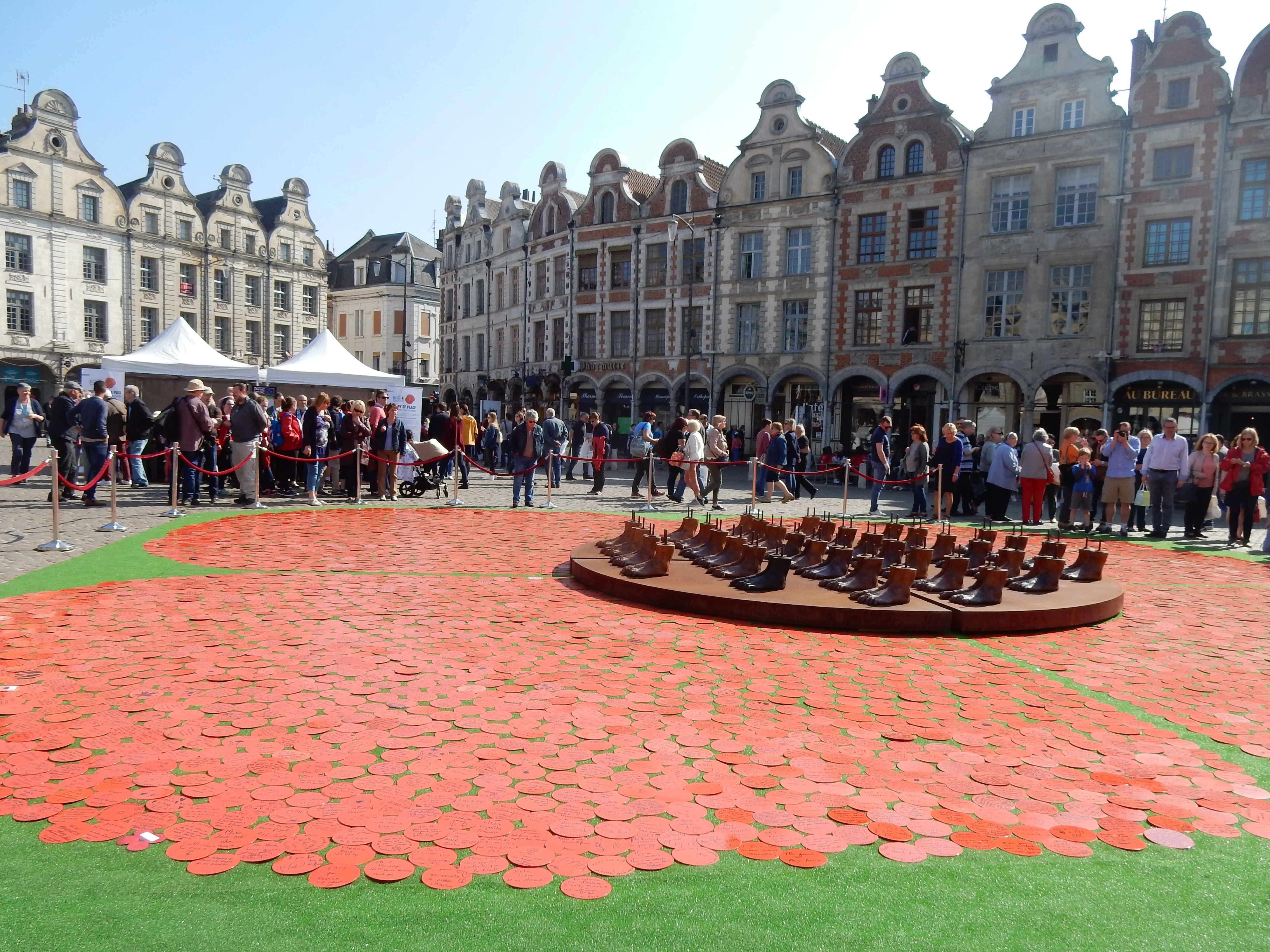
2017 – temporary 100th anniversary memorial in the city centre to those who fought in the battle of Arras, 1917.

It was very sobering to hear about the loss of life and devastation caused. Arras was on the front line for most of the war and, although it is difficult to believe now, the whole of the centre of the city was virtually razed to the ground. After the war they rebuilt it brick by brick back to the original state and you wouldn’t know, very impressive.

We visited Vimy Ridge just outside of Arras which was captured by the Canadians and is seen as the beginning of Canada’s evolution from dominion to independent nation. At the Lens ’14-18 museum we learned about the history of the war in the north of the Pas de Calais.

We also toured the Carriere Wellington where the memorial service had been held the previous year. This is a series of underground tunnels dug by New Zealand miners six months before the battle which joined up disused quarries from the middle ages. These were used to house nearly 24,000 troops up to eight days before the attack. When battle started at 5.30am GMT on Monday 9 April 1917 it was a surprise for the Germans and the Allies were finally able to break the deadlock of the previous three years. However, only due to a great loss of life. An average of 4,000 men died each day in this battle.

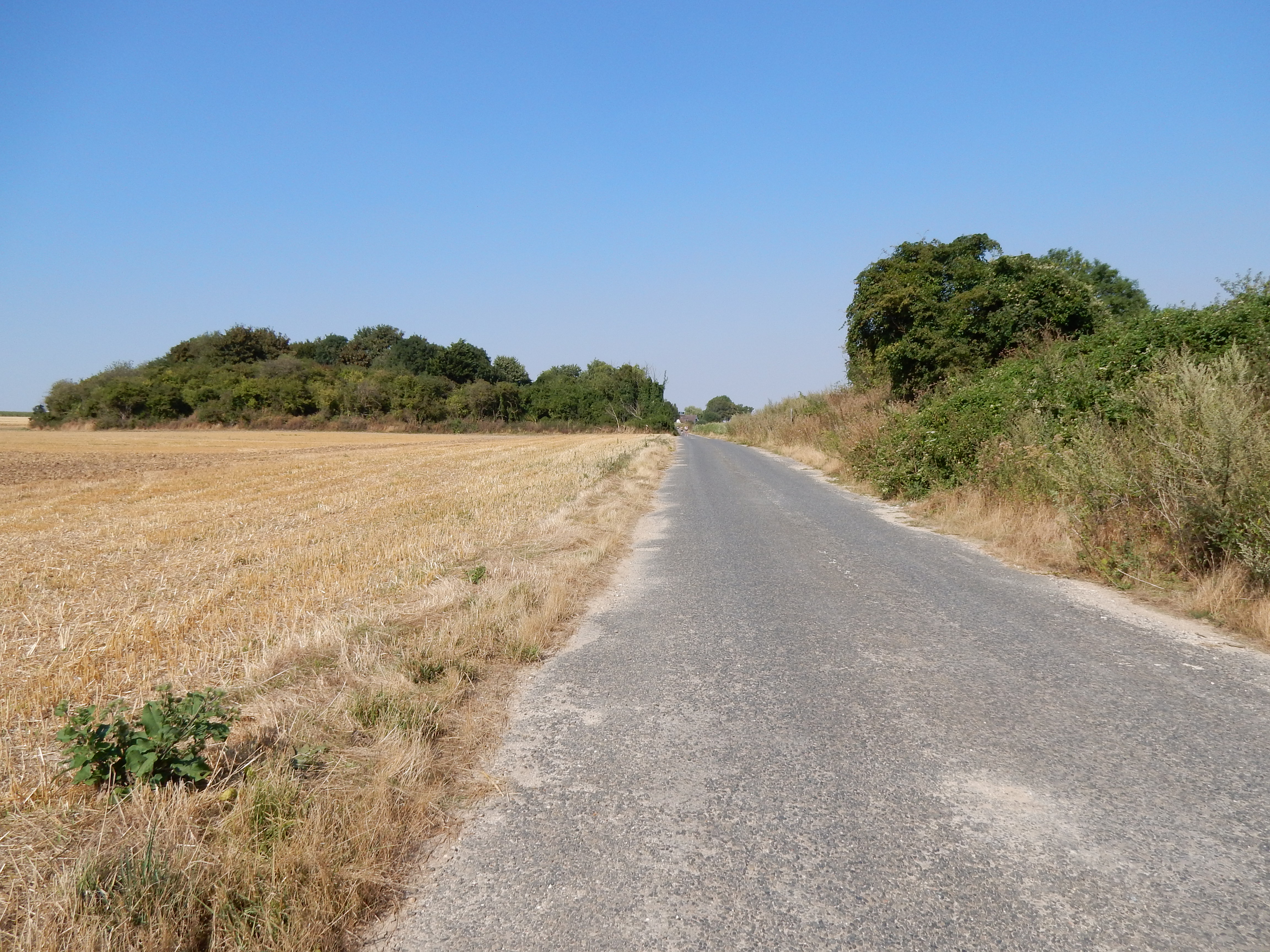
My grandfather was lucky to survive. We visited St Catherine just outside Arras where he was stationed when the attack happened. On Thursday 12 April he walks up to what used to be the German frontline and mentions the ‘complete desolation’ and ‘3 mine craters said to be the largest on Western Front’. We found a couple of miles away those mine craters, still impacting the landscape more than 100 years later.

DSCN8023
Trees grow in the craters created in the battle of Arras, said to be the largest on the Western Front.


DSCN8017
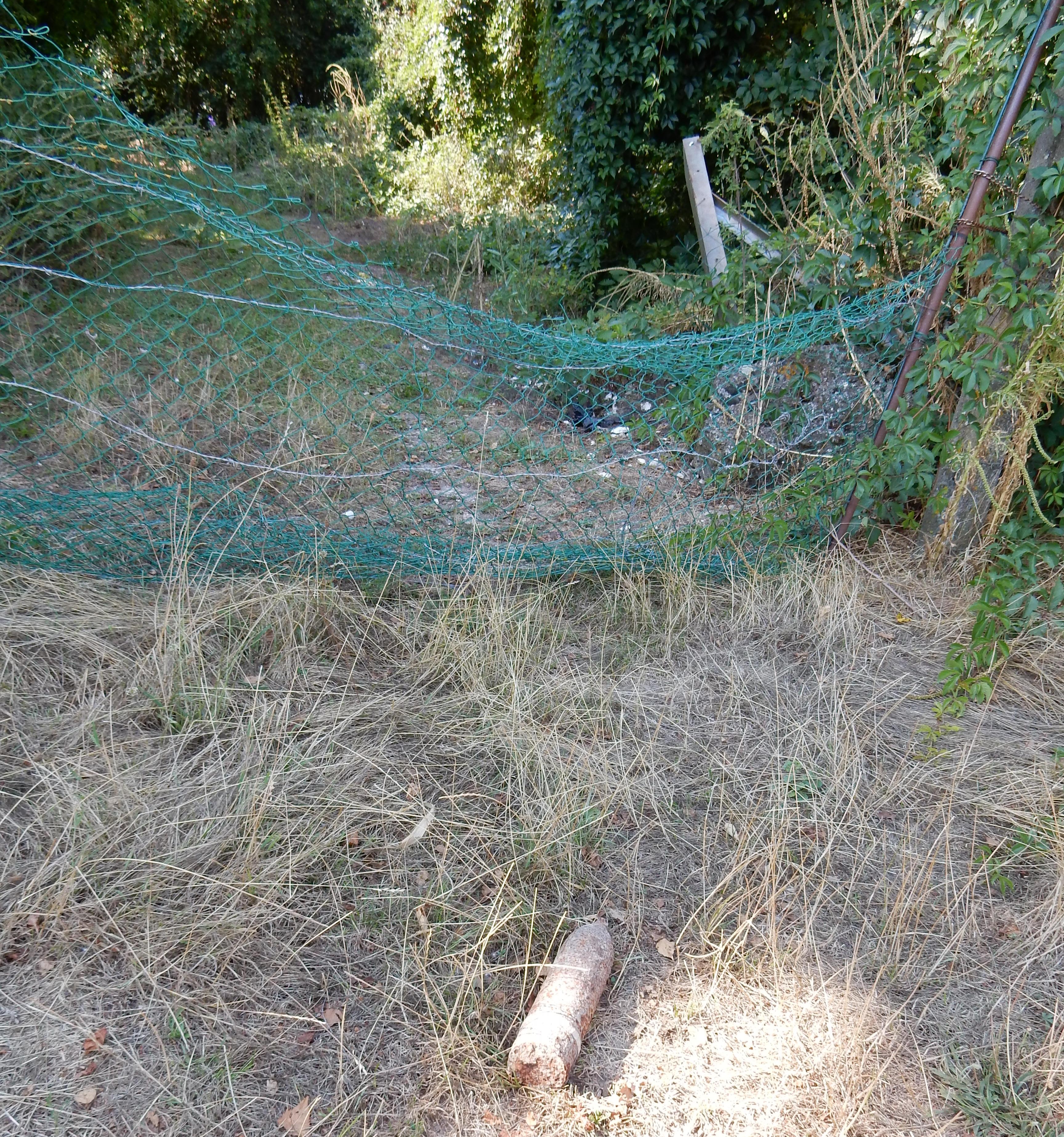
Munitions from more than 100 years ago at the edge of one of the craters.

In the now ploughed field of what used to be no man’s land poppies grow.

DSCN8018
Poppy in what was no man’s land before 9 April 1917.

It was a moving and worthwhile trip commemorating those who gave their lives and survived and an opportunity for good family time as we enjoyed the delights of Arras today.

One week in

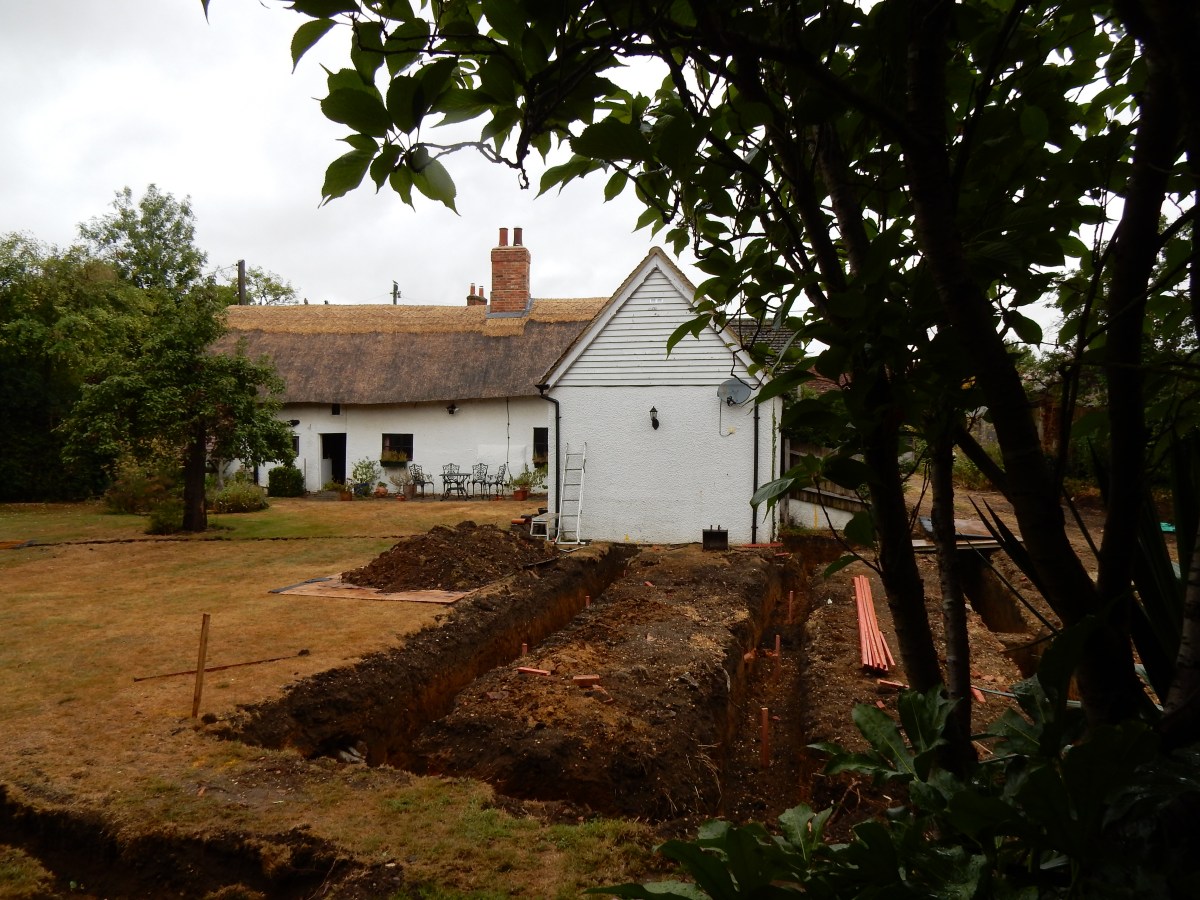
I’m gaining huge respect for builders by the minute. In what will probably be the hottest week of the year last week Ken and his team demolished the garages and greenhouse, dug the trenches for the footings and drainage and kept sub-contractors in check. By the weekend, when the weather finally broke, our garden was a hazardous place. They kindly put boards out so we didn’t accidentally fall in after a glass or two!

DSCN7802
New drainage channels running right across the back garden.

Brawn for the heavy work was obvious. The brain power needed for all the calculations and to make sure everything comes together has been more of a revelation.

The big challenge last week was ensuring there was sufficient gradient for the waste to flow from the extension to the existing drains the other side of the garden. On Thursday afternoon there were some worried faces and conversations. After an evening of working through the calculations Ken was sure on Friday morning that it would be enough and they started digging out the channels. They also had to avoid tree roots including an ancient pear and a rare thorn tree and a silver birch we had lovingly planted a few years ago to mask the wall of the house next door.

We then spent a busy weekend clearing up what we could in the garden, saving displaced plants and cutting up an elderflower tree that had been sacrificed to create more space to get the lorries in. It’s a tight squeeze with a bend and a drop which proved too much for a delivery this week of concrete blocks and beams. They were placed by hoist on our drive and the public path in front causing me some concern it would lead to complaints from neighbours. They all had to be moved manually before they went home for the day. A late one for them and back breaking work.

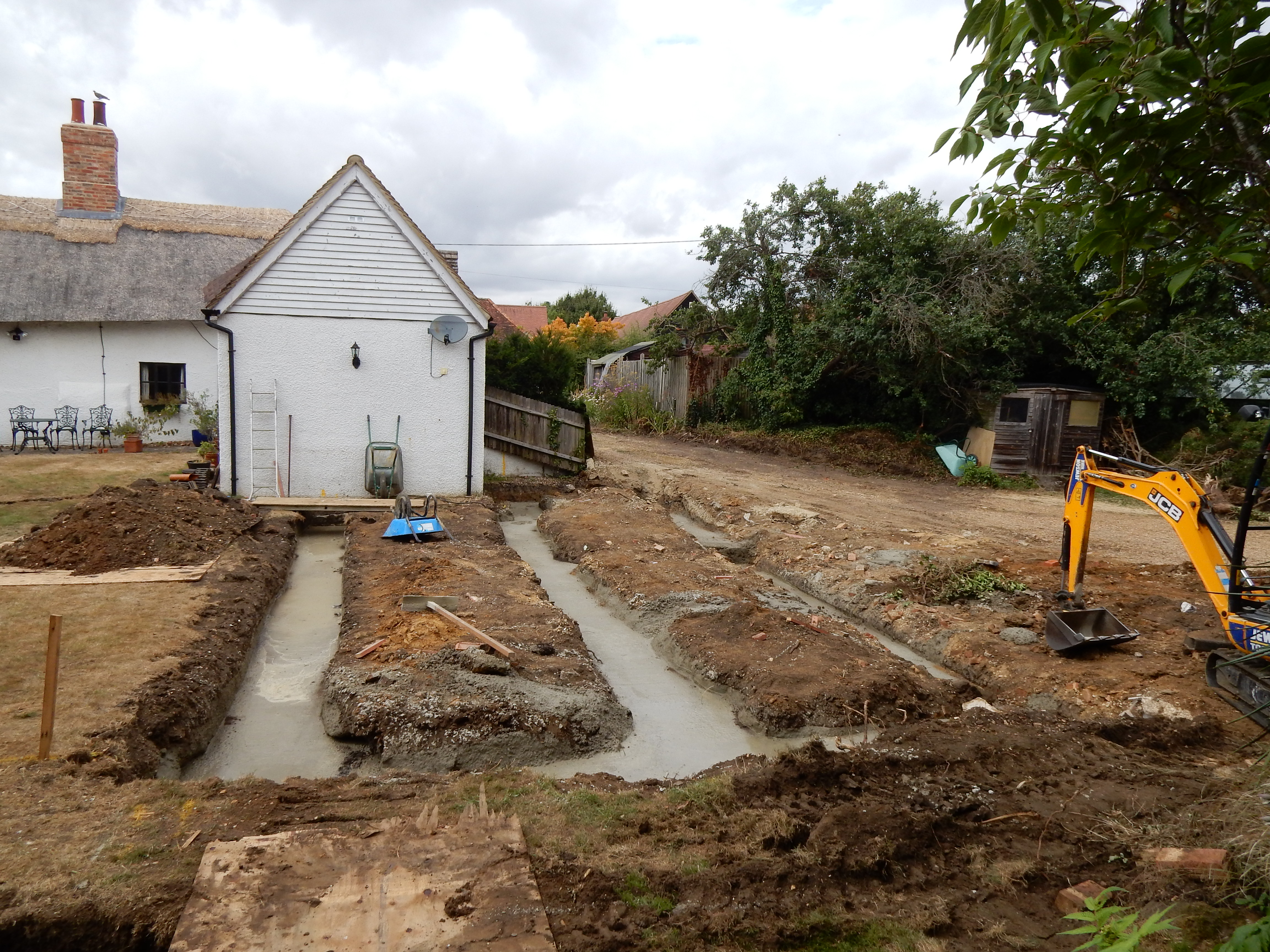
One that did make it in on Monday was the concrete lorry and the holes that took so much time to dig out last week were filled in a couple of hours to form the footings and the foundations for the extension. It has given us a much better idea now of its shape in relation to the existing house.

DSCN7856
The concrete footings are in.

Next are the bricklayers who will start building the foundations and the walls. We suddenly realised that in a few days the siting of our doors and windows would be fixed. Being on site to address issues and questions like this in real time is proving incredibly valuable. We were able to measure out the detail of the toilet and utility room that will be at the back of the extension and decide exactly where we wanted the two windows and back door. The brickies will build to that instead of us having to fit round what someone else thought we wanted.

Going into this project I believed all the detail would have been done by the architect and the specialists who drew up our building regulations and structural calculations. I’ve been surprised how much information is missing and as a result I’m on the phone daily clarifying everything from deflection rates (mentioned in an earlier blog in relation to the sliding doors which has now been addressed with a new set of calculations) and measurements to the size of the rafters and the angle of the roof.

One of our planning conditions is we have to use hand made clay tiles because we are a listed property and in a conservation area. These tiles need a roof gradient of at least 35%. It looks like the architects drawing had the roof pitch at 35% but the building regulations have it at 29%. I need to sort this by next week when the roof materials will start arriving on site!

Ken has been great in going through the plans with me and flagging issues which, if we don’t resolve them now, could be a real problem later on. It’s certainly worth all the tea and milk as the tea breaks are great for these catch up conversations. I then scurry off to the phone and the PC to get the answers.

I’m glad we took the time to find a good builder. One piece of advice about getting a good builder is to be a good client and pay promptly. We’ve had our bill for the first stage and paid it within 24 hours. They have so earned it.